

Most gardens fade out at the property line.
The lawn becomes the neighbour's lawn. The bed runs into a hedge. The path stops because the grass stops.
The garden has no edge it chose for itself.
A gate or a run of fence panels changes that. Not by enclosing the garden, necessarily, but by deciding where it ends and what marks the ending.
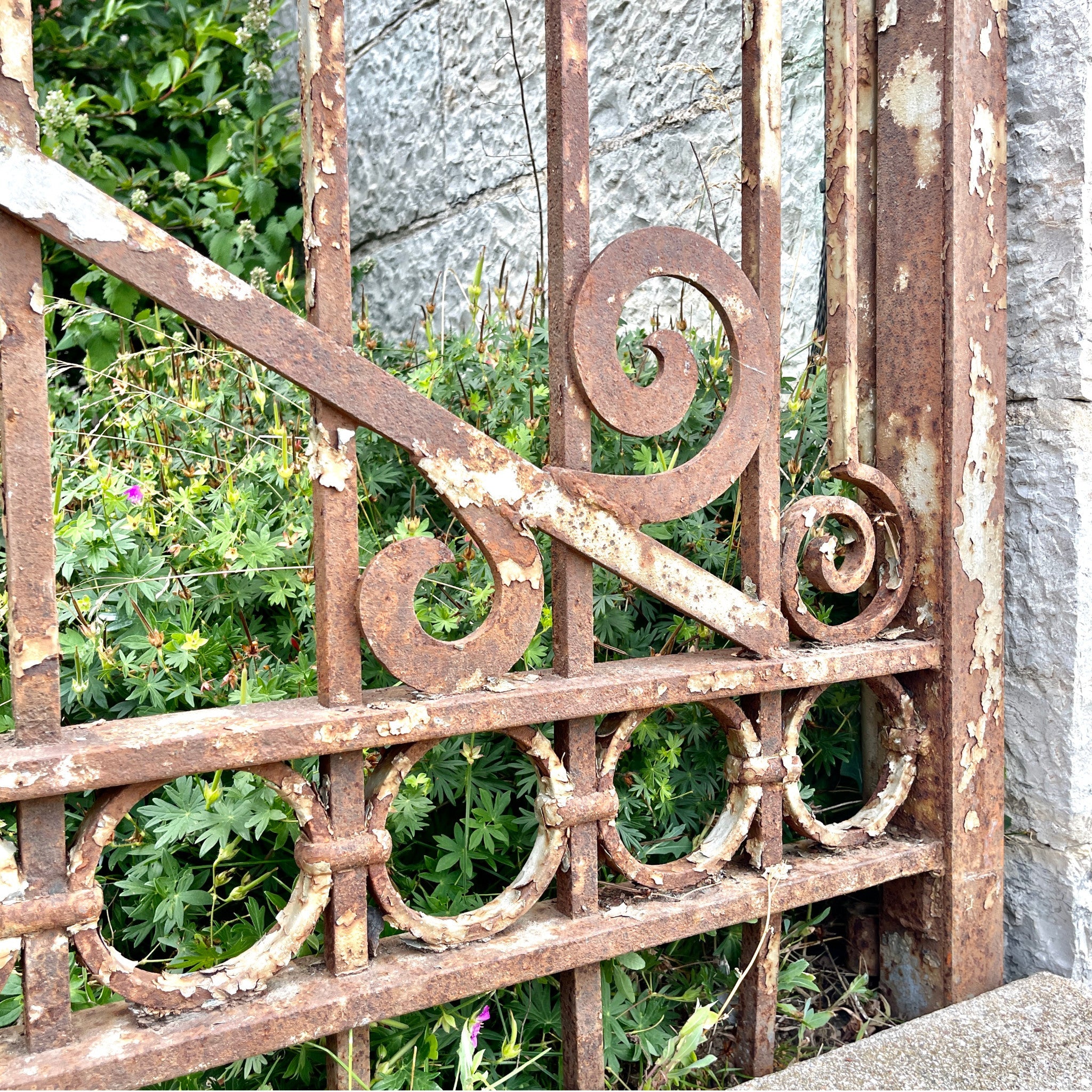
An antique iron gate set into a stone wall makes the gate itself the moment of arrival. A long run of estate fence panels along an edge tells the eye where the garden's structure begins and where it concludes. Even a single ornamental panel - installed as a feature rather than a barrier - can do the work of an architectural punctuation mark.
A gate is not a security decision. It is a compositional one.

The older examples were made for specific properties - a church entry, an estate drive. The foundry knew the site it was supplying. Heavier sections. Deeper detail. Pieces made for a particular place before they were ever decorative.
That history is still in the metal.
We carry single antique iron gates, custom-set pairs, and longer runs of estate fence panels in sections. The sections matter. Seven panels installed along a property line behave differently from one panel on its own. They establish a rhythm the eye can read across the length of a garden - the same way a full run of pendants establishes a line across a room.
Without an edge of its own, a garden just runs out.
With a gate, it ends.
Those are not the same thing.


