

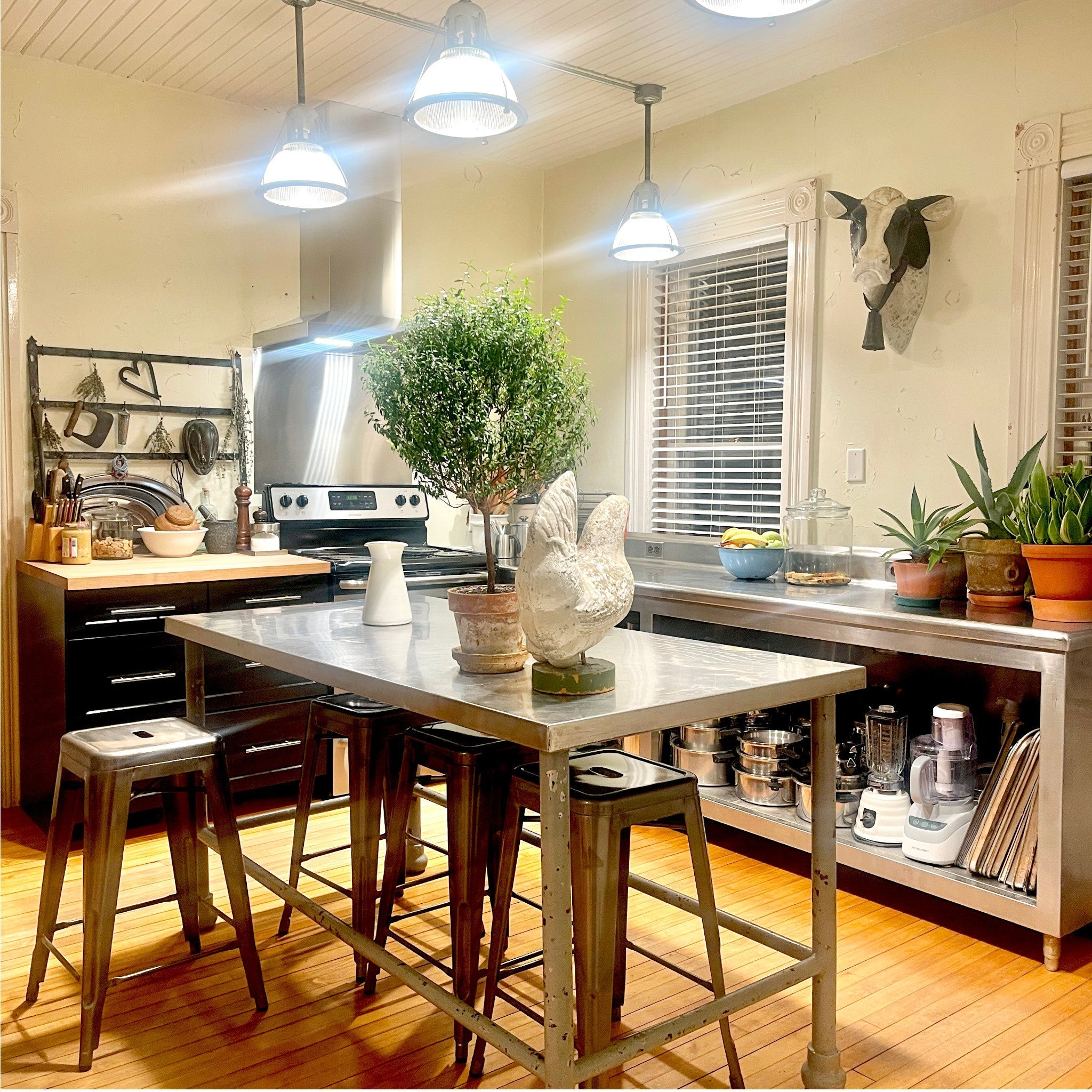
There’s a difference between filling a space and choosing what goes into it.
This kitchen started with constraints. Two windows. Five doorways. A pantry off to the side. The kind of room that resists standard layouts and rewards a bit of resolve.
Instead of working around that, the owners made a decision early on. They would build the kitchen around a few pieces they believed in.

A vintage commercial stainless steel sink with a proper draining board.
A long run of stainless cabinetry.
A steel work table set loose in the middle of the room.
All three came with a past life. None were designed for a domestic kitchen. That was the point.
What matters here is not the material, or even the look. It’s the commitment. Stainless steel behaves a certain way. It shows use. It reflects light differently throughout the day. It asks you to accept it as it is.
And once you do, the rest of the room follows.

The table becomes the centre without needing to announce itself. It’s where meals start, where people gather, where things get set down and picked back up again. It moves when it needs to. It stays when it should.
The sink does what it was built to do. It handles volume. It doesn’t ask for care. It takes it anyway.
Nothing here is trying to match. Nothing is overly resolved. The room holds together because the choices behind it are consistent.
The owners cook. They entertain. The kitchen reflects that without explanation.
This is what happens when you stop designing toward an outcome and start living with what you choose.
Not everything needs to fit. It just needs to belong.


